Short answer
Sticking means the release film is missing, too thin, still wet, or the wrong chemistry for your system and mould. Check mould temperature, flash-off time and the condition of the mould surface before changing product. Spraying more rarely fixes it and usually causes build-up.
Likely causes
Film worn through
Re-spray interval too long for the number of cycles.
Water-based agent not flashed off
On a cool mould, no barrier forms before pouring.
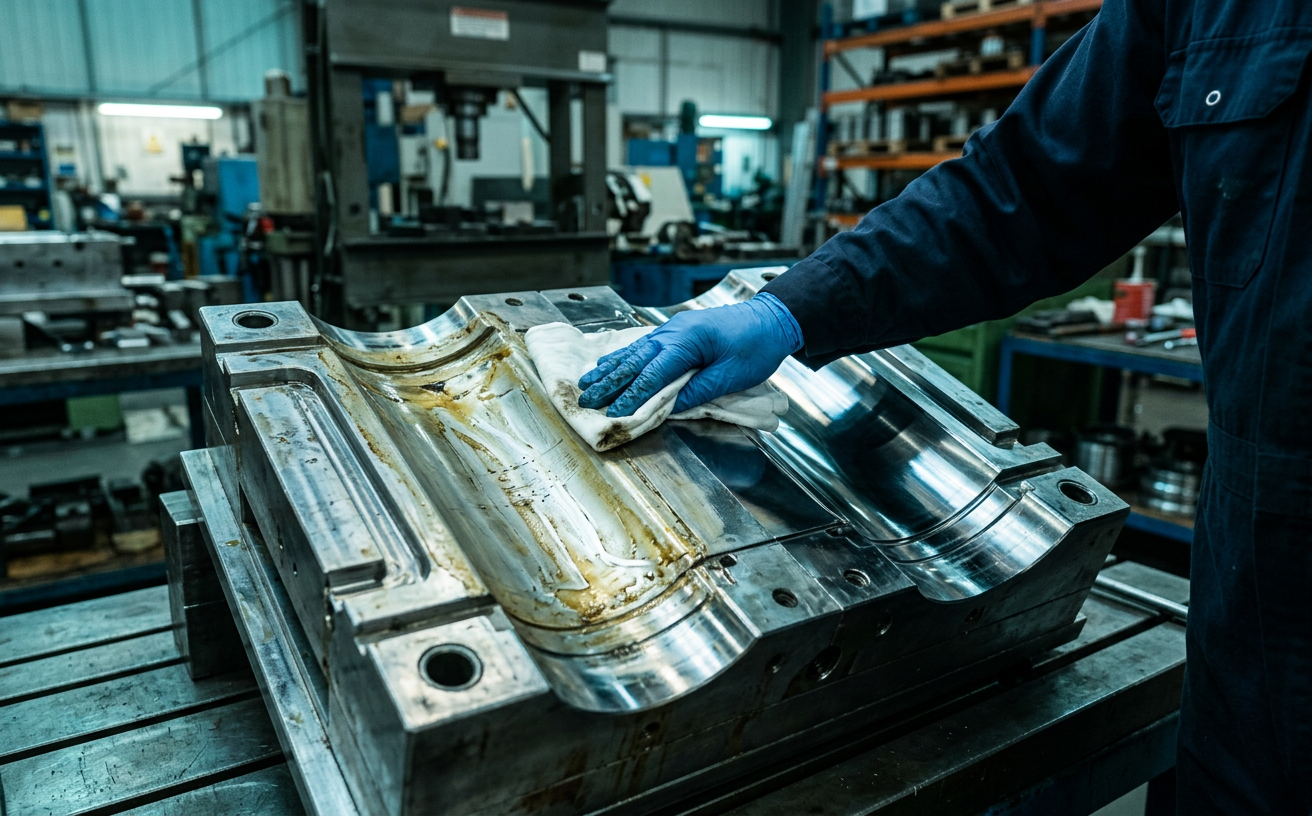
Mould surface contaminated
Built-up residue prevents a continuous film.
Mould temperature outside the working window
Too cool or too hot for the chosen agent.
Demanding geometry or texture
Undercuts, deep texture and sharp corners need more robust release.
How to diagnose it
- Is sticking in the same places (film or geometry) or random (flash-off or temperature)?
- Check mould temperature with a contact thermometer.
- Inspect the mould under raking light for residue.
How to fix it
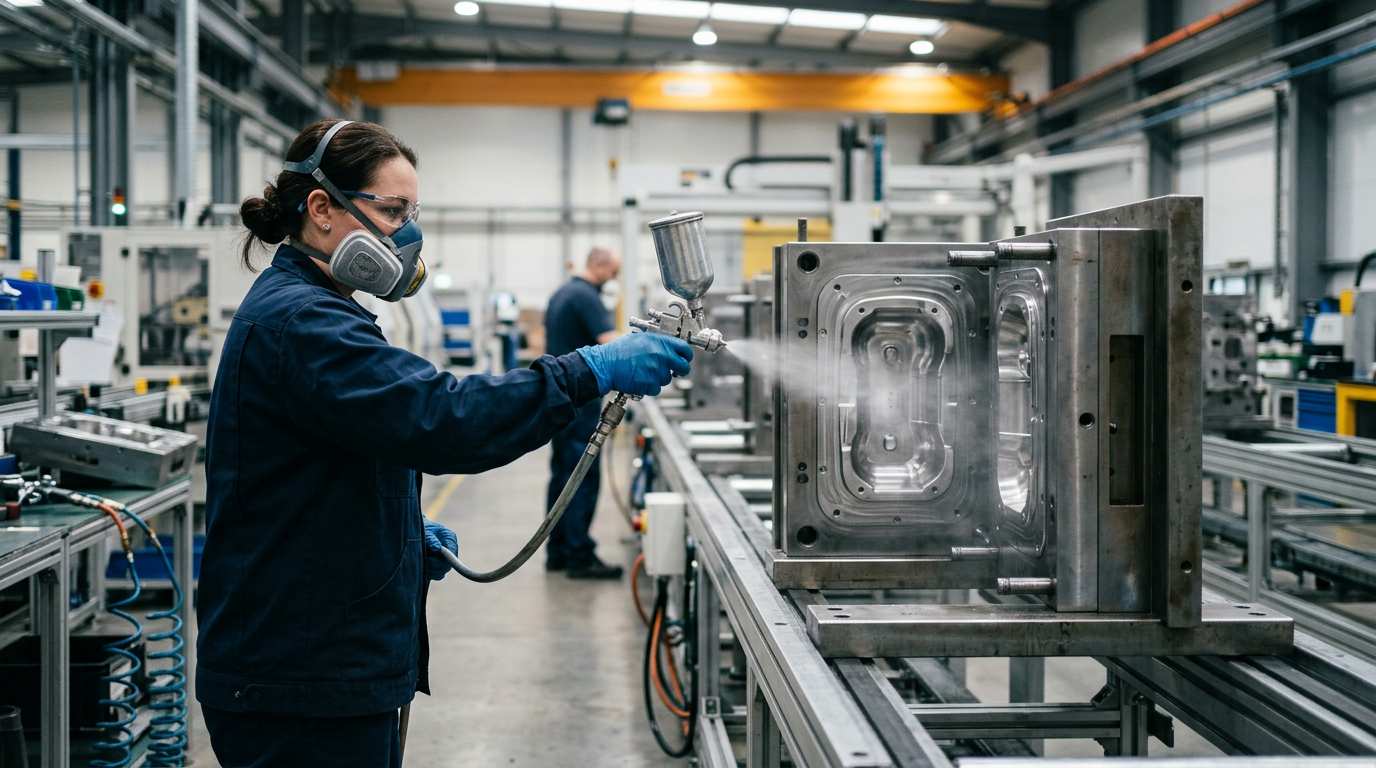
- Clean the mould and apply a fresh thin coat.
- Set the re-spray interval by cycle count from a trial.
- Adjust mould temperature or flash-off time, or move to a solvent-based or hybrid grade for faster flash-off.
- Use mould wax or reinforcing paste on stubborn spots.
How to stop it coming back
- Define re-spray interval in cycles, not minutes.
- Log mould temperature each shift.
Where this problem appears most
Send us your batch number, PU system and a photo of the defect and our technical team will help you trace the cause. Ask a technical question.