Short answer
Isocyanate reacts with water to make CO₂. If water sits at the skin surface, from a water-based release agent that has not flashed off, a damp or cold mould, or moist polyol and colorant, it forms gas bubbles right at the skin. Fully dry the mould, hold the correct mould temperature, apply a thin film and control raw-material moisture.
Likely causes
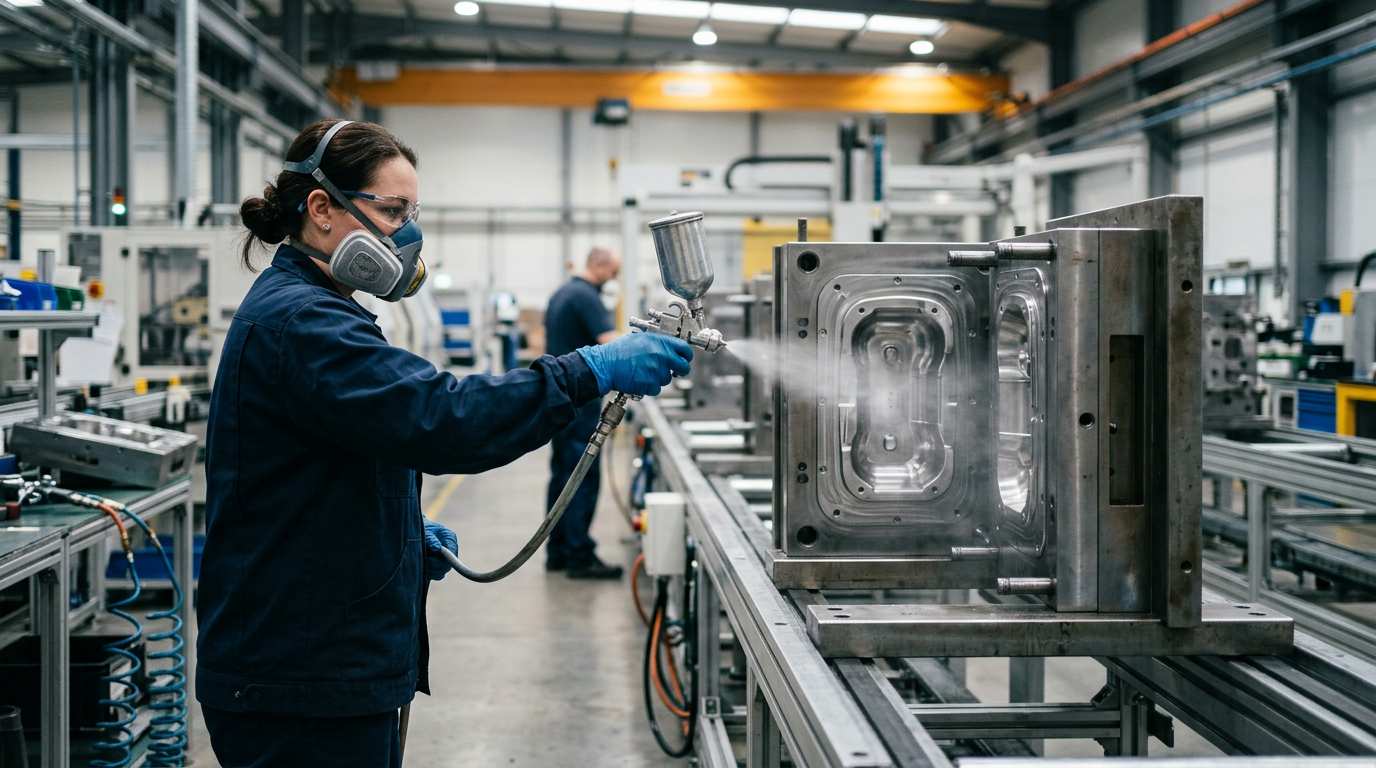
Water-based agent not flashed off
Residual water reacts at the skin.
Mould temperature too low
Slows evaporation and chills the skin.
Moisture in polyol or colorant
Adds blowing gas throughout.
Pooled liquid in texture or corners
Local excess film does not dry.
Poor venting or pouring
Trapped air gives bubbles at high points.
How to diagnose it
- Same places every time points to pooling or venting; random points to moisture.
- Trial a solvent-based agent on the same mould.
- Karl Fischer moisture on polyol and colorant.
How to fix it
- Lengthen flash-off or raise mould temperature within spec.
- Apply a thin, even film and blow off pooled liquid from texture detail.
- Use low-moisture colorant and keep polyol dry.
- Repair or add vents.
How to stop it coming back
- Control moisture in raw materials.
- Set film weight and flash-off in the process sheet.
Where this problem appears most
Send us your batch number, PU system and a photo of the defect and our technical team will help you trace the cause. Ask a technical question.