Short answer
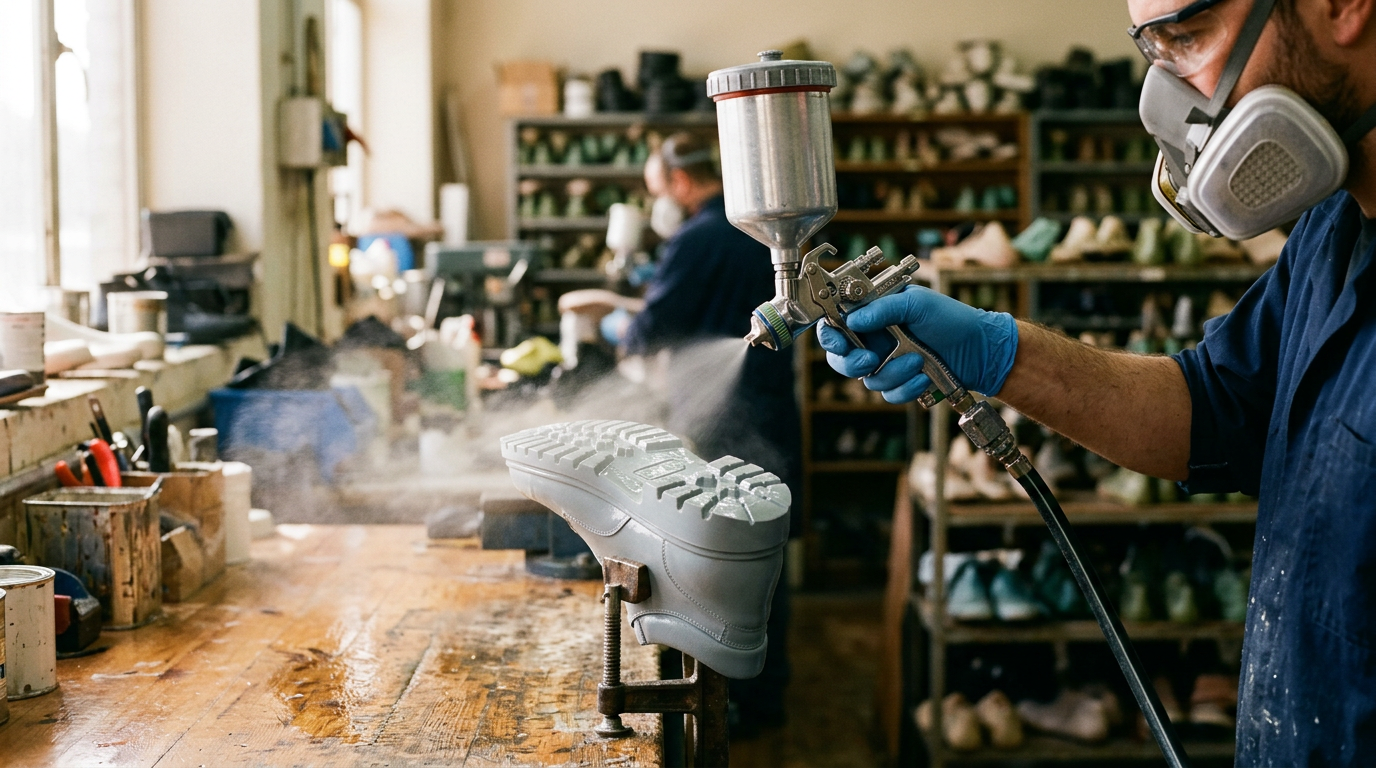
These are spray and solvent problems. Too thick or wet a film wrinkles, too little flash-off pops solvent into pinholes, oil or water in compressed air makes craters (fisheyes), poor atomisation gives orange peel, and a fast thinner in cool humid conditions causes blushing. Fix the spray set-up and match the thinner to conditions.
Likely causes
Film too heavy or wet
Runs, wrinkles and slow drying.
Short flash-off or cold mould
Solvent escapes through the film and leaves pinholes.
Contaminated compressed air
Oil or water droplets cause craters.
Poor atomisation
Wrong nozzle, pressure or viscosity gives orange peel.
Fast thinner in humid, cool conditions
Chills the film and pulls in moisture, giving a white blush.
How to diagnose it
- Spray a test panel on a heated plate and compare to the mould.
- Check air-line water and oil separators.
- Log humidity and mould temperature when defects occur.
How to fix it
- Spray thinner, even passes with finer atomisation.
- Use a slower PU thinner in humid conditions, as recommended for the coating.
- Clean the air supply.
- Adjust mould temperature and flash-off time.
How to stop it coming back
- Clean spray guns and pots with the recommended thinner after every shift.
- Maintain air filters and log spray conditions.
Where this problem appears most
Send us your batch number, PU system and a photo of the defect and our technical team will help you trace the cause. Ask a technical question.